
How to Unplug from Work in the New Year

How to Unplug from Work in the New Year

Now that 2020 is here, it is the perfect time to reassess our priorities. We might work from 9 am to 5 pm every day, but we need to understand the importance of unplugging from work, too. This can be harder than we think, as we find ourselves thinking about all of the work that we have to catch up on or complete before we head back to work. Unplugging from work is imperative all year round because without a healthy work and home life balance, you can lose sight of what matters. We need to let go of the poor work ethic of the previous years and start prioritising what matters most for ourselves and our business.

In a recent study, it was found that long work hours increase your chances of early death by 20%. That’s terrifying, right? This is why it is so crucial that you don’t overwork yourself. Even when you’re not in the office, you might still have your ‘work head’ on; meaning you’re sat at home thinking about all of the work that you have to do, checking emails or even completing projects while sitting on the sofa with your partner.

For our advice on how to unplug from work and avoid the same poor work ethic from last year, continue reading this blog post. It’s essential that you distance yourself from work over the weekends, holidays and when at home, otherwise, you put your mental and physical health at risk, as well as miss vital family time. 

Push Yourself to Leave the Office

The first thing that you can do to ensure that you start prioritising yourself is to leave the office when contracted to. It is merely impossible to switch off your work brain if you are in the office still doing work past 6 pm. Also, if you’re an entrepreneur or freelancer, it can be even harder to not overwork as you might not necessarily stick to office hours; by giving yourself a working pattern, you reduce the risk of overworking, as well as causing yourself stress from now having any downtime.

It’s time to be proactive during your regular working hours so that you complete your tasks on time, and also learn to accept that you can pick up extra tasks the day after. If you aren’t as productive during the day, you might feel that you need to stay later to finish projects and meet deadlines. This can not only cause you to stress, but it can also make it harder for you to unplug from work while at home, too.

Stanford economics professor John Pencavel found that productivity falls sharply after a 50-hour workweek. If we want to be producing work of the best standard, we need to set boundaries; the longer we stay in the office, the more comfortable we get working long hours. This is bad for our mental health as it steers your mind away from ever fully relaxing; making us mentally exhausted and overworked. Don’t slip into old, bad habits – if you are scheduled to finish at 5 pm, make sure that this is the time that you leave the office so that you can start focusing on yourself at home.

Avoid Non-Important Emails

The Centre for Creative Leadership found that smartphone users spend five hours on work emails every weekend. And with 3.3 billion of us owning a smartphone, it will be hard to find one single person in your office without one. As it is so normal to be carrying our phones around with us, it’s not a surprise that even when we are sat at home and an email pops up, we feel the need to check it and reply. 

Maybe there is a pressing matter at work that you need to deal with or you’re waiting to hear back from your manager, either way, it can wait until the next morning. When you’re at home, you should be focusing your time on yourself, not work. But, with your emails so easy to access, it’s so easy for you to be gripped into doing so after work and on weekends. While at home, try to leave your phone in an area that you still go in, but one that you don’t spend most of your time in; this way, you can still check it on passing, but you won’t be consistently sat there flicking through emails.

If you receive an email after work hours or when you are on holiday, you can set up an automated email response which informs people that you are away from the office, and when you will be back. Not only is this helpful to your clients and colleagues, but it can also stop you from feeling the need to reply straight away.

Start a New Hobby to Unplug From Work

Let go of your bad work ethic of 2019 and make real change in 2020 by prioritising yourself and your mental health. Sometimes we work from home or stay extra hours in the office because we have nothing else to occupy our minds with; if we live alone, it can be especially lonely and boring. Or maybe we are going through a situation which makes us avoid being at home alone. Picking up a hobby which forces us to leave work on time can help us unplug from work and be happier in life.

Hobbies can include anything from a reading club and a sports team to even attending a crafts group. Whatever you have a mild interest in, there will most likely be a club for it somewhere nearby. This gives you the perfect opportunity to focus on something other than work, and really take the time out to do something that you love; thus, practising self-care. Begin looking online for clubs; in local newspapers, online and on shop notice boards will be your best bet. 

Explore the rest of our website today to learn more about Mountain Summit and the importance of leadership within the workplace. Unplugging from work is vital for every employee, no matter their role, but being a leader, it can sometimes come with extra pressure. By learning how to unplug from work and educating your team in doing the same, you’ll encourage harder work in the office and happier employees in and out of work. 

Mountain Summit’s personal development programme can help you develop on your skills as a leader, as well as shed light on what you should prioritise this year in order to become a great leader.

Share this post

Scroll to Top

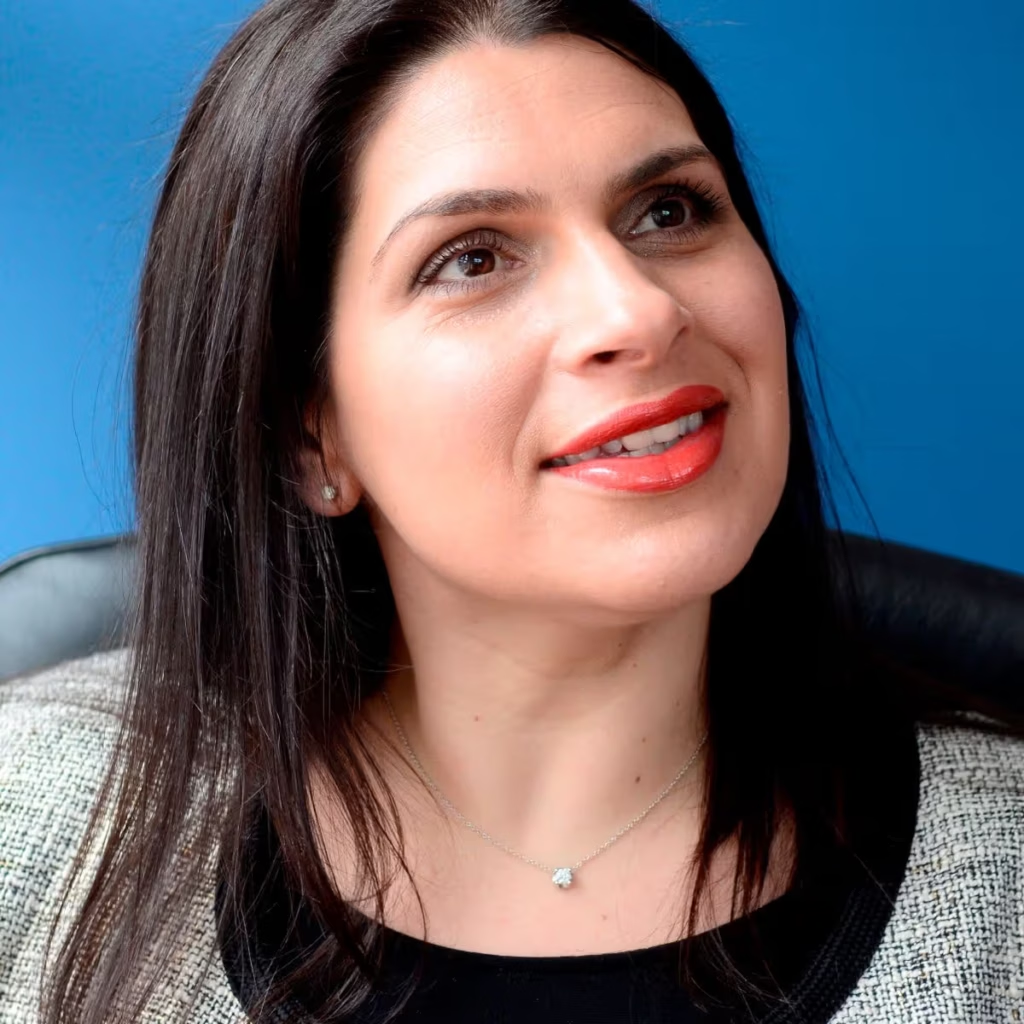
Sarah Bailey

CEO of Chester & North Wales Chamber of Commerce

The economic road ahead panel

A conversation you will not want to miss with some of the region's most prominent business minds. What are the real opportunities and challenges facing businesses across the Northwest and North Wales right now, and what does the economic road ahead actually look like? Expect candid views, lively debate and plenty of audience interaction.

Sarah spent decades in corporate banking at NatWest before becoming CEO of the Chester & North Wales Chamber of Commerce. She brings a depth of regional insight and business understanding that is genuinely hard to match.

Emma Estrela

Wim Hof Trainer

Leadership starts with physiology

Before strategy, vision, or decision-making, there is the state of the nervous system beneath it all. In this session, Emma explores how physiology directly impacts resilience, communication, energy, adaptability, and the ability to stay present under pressure. Combining practical breathing techniques with real-world experience, she offers grounded tools that help people regulate stress, sharpen focus, and reconnect to their innate capacity for clarity and performance.

Emma Estrela is one of the world’s most experienced Wim Hof Method instructors and trainer of trainers, having spent years teaching breathwork, cold exposure, mindset, and human performance across retreats, expeditions, and leadership environments globally. Her work bridges science, embodied awareness, and human connection, helping people lead not just from the mind, but from the state they bring into the room

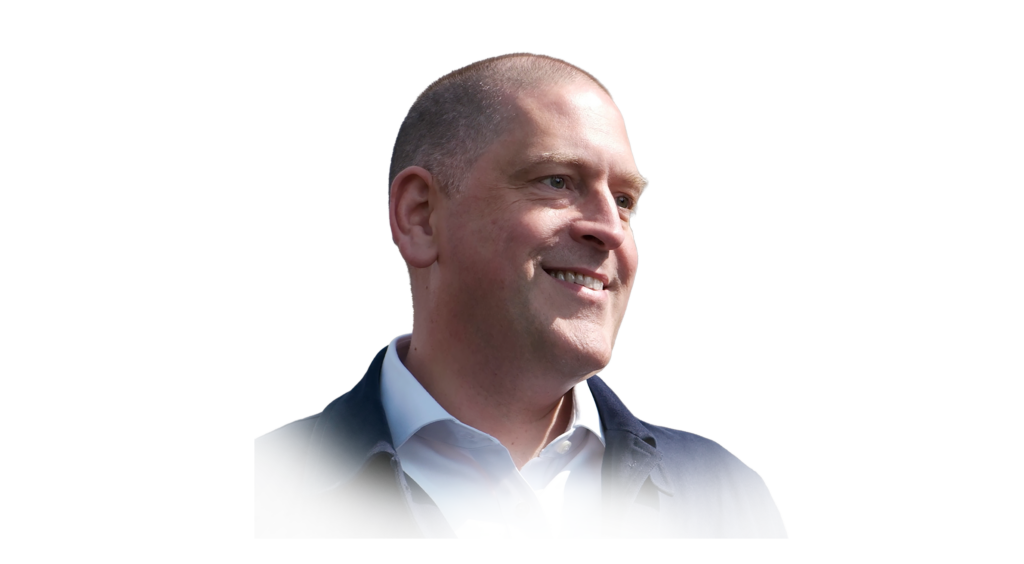
Ben Fletcher

Cheshire Mayor Candidate & Veteran FD

The economic road ahead panel

A panel of regional business leaders talking straight about the opportunities and challenges facing businesses across the Northwest and North Wales right now. Expect honest perspectives, robust debate and a room that is very much part of the conversation.

Former CFO of The Very Group and MD Boots Opticians & Clarks Shoes, Ben is now taking his commercial acumen into politics as a Cheshire Mayor candidate. Few people understand the intersection of business and regional economy better.

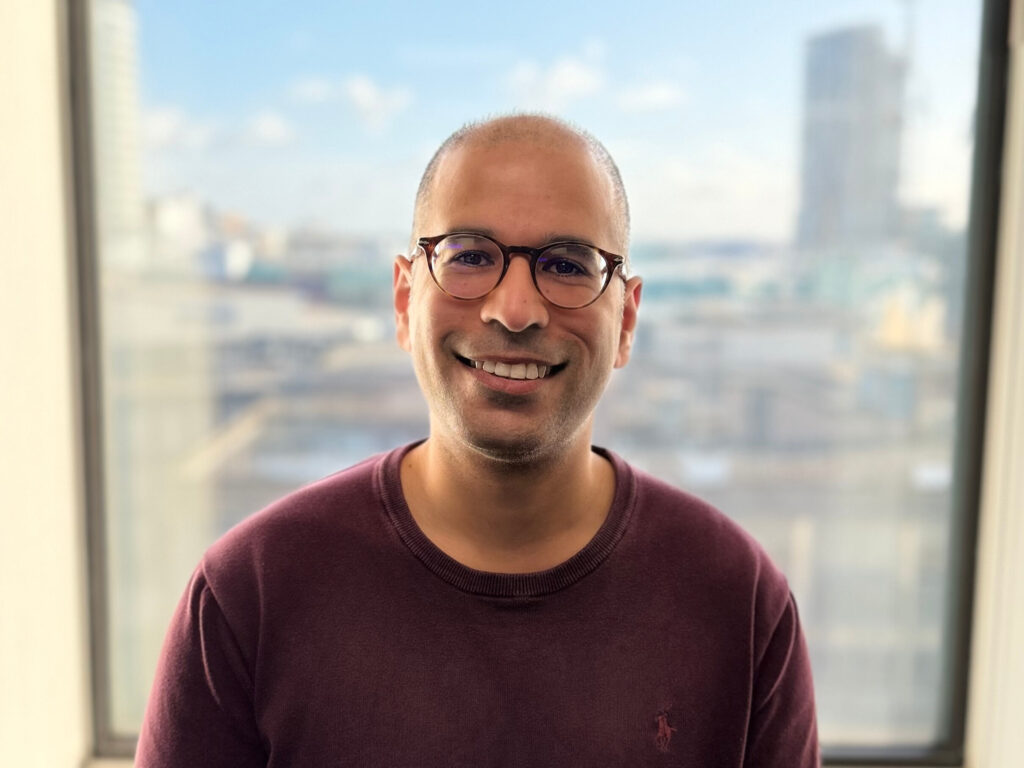
Hardeep Johal

Chief Technology Officer of Orlo

The Data Revolution with Afternoon Tea

Data and AI together are transforming what businesses can do with the information they already have. In this session Hardeep breaks it down in a way that is engaging, accessible, and genuinely useful. Expect big ideas, practical insight, and afternoon tea.

Hardeep has spent his career harnessing the power of data to drive real organisational impact. As CTO of Orlo, he sits at the cutting edge of where data and AI meet, and he has a rare gift for making the complex feel completely within reach.

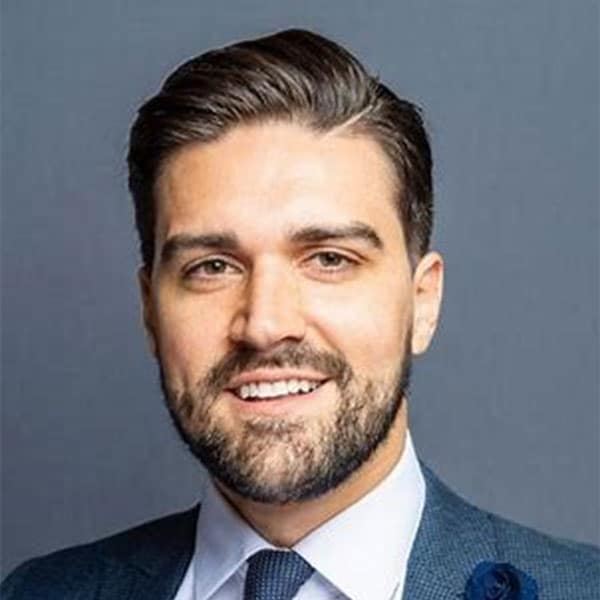
Dan Reeves

Co Founder of SUBJCT.ai

Who Do I Need in My Team to Win in the Coming Wave

The way customers search, discover and make decisions has changed fundamentally. This session is about what that means in practice, and what it actually takes to drive visibility and win new business in the search landscape that now exists.

Dan is a veteran digital expert and Co Founder of SUBJCT.ai, a platform built to optimise content for AI-driven SEO. He brings hard-won practical knowledge of customer acquisition in the AI search era, along with the specific strategies and tools that make the difference.

Leyla Tindall

Founder of Tindall Perry

Who Do I Need in My Team to Win in the Coming Wave

Building the right team has always mattered. Right now, it matters more than ever. In this session Leyla shares what it actually takes to design a business around your objectives, hire the right people to get you there, and build a team that is ready not just for today but for what is coming next.

Leyla has spent 40 years recruiting top talent for organisations at every level. As Founder of Tindall Perry, she brings rare depth of experience to one of the most important decisions any business leader makes, and she knows better than most what separates the teams that win from the ones that do not.

Dan Newman

Founder of Quant

AI Lab: The Next Level Accounting Department

What does an AI-enabled accounting function look like in practice, and how do you make the business case for investing in it? Dan breaks down exactly what is possible, what it takes to get there, and why this is one of the most important decisions a growing business can make.

Dan is the founder of Quant, a fully chartered accountancy practice built around the belief that accounting should do far more than keep you compliant. He has thought harder about the future of this function than almost anyone else in the industry.

Christina Engebak

CEO of Lexidy

AI Lab: Making Operations More Efficient

This session is a real-world case study on using AI to transform how a business operates from the inside out. Christina shares what Lexidy has implemented, what worked, what didn’t, and the lessons learned while scaling a fast-growing international business.

Christina has helped grow Lexidy across seven countries without external capital. That kind of growth requires operational discipline, strong culture, and smart use of technology. She brings a practical perspective on how AI can support teams, improve execution, and create better client experiences at scale

Roger Martin-Fagg

Leading British Economist

When is the next crash?

Will data centre expenditure trigger an economic crash? How do you grow your business against a backdrop of slowing economic growth? This is an interactive session, Roger will lead the room through the economic forces shaping every industry right now and what they mean for you. Grab a non alcoholic drink and get ready.

Roger predicted the financial crisis. His skill is making economics not just understandable but genuinely useful to the people running businesses inside it. There are very few economists who can do what Roger does in a room.

Mountain Adventure Team

Mountain Summit

Embracing Uncertainty

Over two days, Mountain Summit takes entrepreneurs through real world challenges designed to change how they relate to fear and uncertainty. The principle is simple: use fear, don't let fear use you. You will leave with the mindset, the skills, and the team around you to move forward on the front foot.

Ben Nimmo

Founder of Orlo

Navigating Your Way Forward with AI

Where are we with AI right now, and where are we actually going? This session cuts through the noise and gives you a clear, honest picture of what AI means for your business today and the decisions you need to be making for tomorrow.

Ben is the founder of Orlo, a platform that changed the way organisations communicate with their customers. A genuine tech visionary, he brings clarity and real expertise to one of the most important conversations any business leader can have right now.

Matt Fowler

Founder of Incredible Thinkers

Becoming a "Friction(less) Entrepreneur"

What's actually slowing you down? In this session Matt helps entrepreneurs find the friction they didn't know was there, understand where it comes from, and start reducing it for good.

Matt is a performance coach and author of the forthcoming book “Friction(less)". His Friction(less) Leadership method flips the usual approach: instead of piling on more skills, it strips away the hidden friction - in identity, conversations, energy, and decisions - that quietly holds people back. Drawing on evolutionary psychology and the science of how we actually change, he's spent over a decade helping leaders and entrepreneurs perform at a level they didn't think was available to them.

Kyle Hatchard

Founder of Stem Tec

How to Deliver Results with Emerging Technology

From AI to quantum computing, the technology exists. This session is about what happens next, how you take it off the page, into your business, and make it actually work. Kyle will share what successful implementation really looks like and what separates the businesses that get there from the ones that do not.

Kyle is a future-focused technologist with a track record of delivering some of the most complex and ambitious tech projects out there. He specialises in bridging the gap between what is possible and what is practical, making it work in the real world.

Jesper With-Fogstrup

CEO of Moneypenny

The Technology Driven SME

The next wave of technology is already reshaping how SMEs operate. In this session Jesper shares the truth as to what it actually means for your business, how to get ahead of it, and the leadership decisions that turn emerging technology into real results.

Jesper has led businesses at every level, from senior leadership at HSBC and Compare The Market to CEO positions at Smoove plc and The LateRooms Group. Now at the helm of Moneypenny, the number one provider of virtual assistant services to SMEs, he brings a rare combination of global reach and hard-won leadership insight that he will be sharing at Mountain Summit.

X